
Ordering a batch of custom pet tags sounds simple until you realize how much can go wrong: a supplier that quotes low but hides mold fees, a material that fades after three weeks on a collar, a shipment that arrives off-spec with no recourse. For buyers sourcing silicone pet ID tags, custom pet tags, and other OEM pet supplies, the difference between a profitable season and a margin-killing one usually comes down to sourcing discipline, not luck.
This guide walks through the full buying journey — from writing your spec sheet to clearing the goods — so you can source wholesale pet accessories with confidence.
1. Nail Your Specification Before You Ask for a Quote
The single biggest cause of mis-quotes is a vague brief. Before contacting any factory, lock these details:
- Material grade: food-grade silicone (LSR or HTV), not low-grade materials like inferior plastics or PVC soft gel. For pet-worn items, food-grade is the safe default.
- Shore hardness: typically 50–70A for a tag that is durable but still soft and quiet.
- Dimensions & thickness: tag size, hole size (must hold a standard split ring), and minimum wall thickness.
- Decoration method: molded/embossed, screen-printed, pad-printed, laser-engraved, or a combination — and how many colors.
- Quantity & colorways: total pieces, SKU count, and Pantone references for each color.
- Packaging: individual polybag, hang tag, barcode sticker, or retail-ready card.
A one-page spec sheet is the cheapest form of quality insurance you can buy.
2. Vet the Supplier Before You Send Money
Price is easy to compare; reliability is not. Run every candidate through this screen:
- Certifications: ask for FDA, LFGB, and REACH/RoHS compliance documents. For children’s-adjacent or chewable products, CPSIA may also apply.
- Factory audit: request photos or a live video walkthrough of the molding floor. A real manufacturer runs its own injection or compression machines and curing ovens.
- Samples: never skip samples. Ask for a physical pre-production sample in your exact material and hardness.
- Communication: does the sales contact answer technical questions directly, or route everything through a translator? The faster and more specific the answers, the more likely they own the production line.
- References: request two or three existing B2B clients you can contact.
A strong benchmark: a factory with 30 molding machines and 10 compression/vulcanizing presses can comfortably sustain 800,000+ units per month. If a “factory” can’t describe its machine floor, treat it as a trading company.
3. The Real-World Verdict: Why Pet Owners Ditch Metal for Silicone
The best sourcing decisions are backed by what end customers actually experience. Two recent verified reviews show why silicone tags are winning shelf space from traditional metal tags:

Figure 1: A verified buyer notes that the soft silicone tag does not clink against bowls, is bright and easy to see, lightweight, and made from thick durable rubber with clear print.
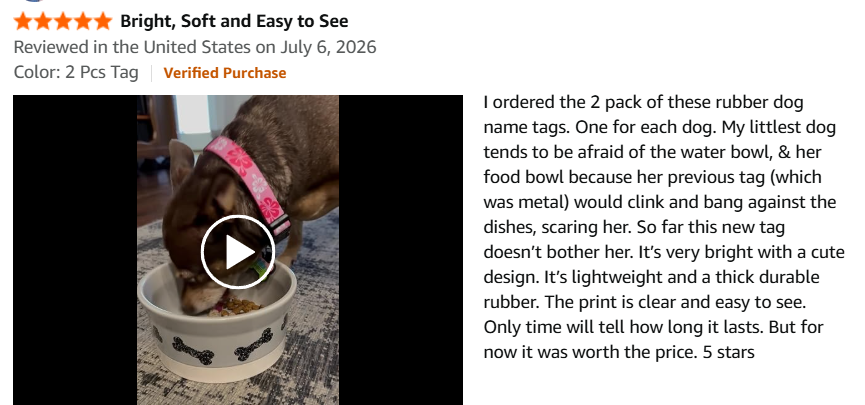
Figure 2: Another verified review highlights soft, quiet wear, excellent print quality, bright colors, easy attachment, and durability — even after being chewed, there were no bite marks.
These reviews confirm the four selling points B2B buyers should look for in a supplier:
- Silent wear — no metal-on-metal clinking that spooks pets or annoys owners.
- Clear visibility — bright colors and sharp engraving that stay readable.
- Lightweight comfort — pets forget it is there, so the tag stays on.
- Chew and weather resistance — soft enough to be comfortable, durable enough to survive real-world abuse.
When your product line can deliver these four benefits, you are not just selling a tag; you are selling the upgrade from metal.
4. Understand MOQ, Pricing, and Lead Time — Including the Hidden Costs
Pricing for custom pet tags typically breaks into three parts:
- Tooling / mold fee: one-time, and often the largest upfront cost. Standard molds run roughly 7–10 days; complex multi-cavity molds take 10–15 days.
- Unit price (standard solid-color tags): scales down with volume. A standard solid-color tag at around $0.45 per piece at 500 pieces drops to roughly $0.28 per piece at 20,000 pieces. Specialty shapes, special packaging, custom tooling, or any non-standard option require a tailored quote — pricing adjusts to match the specification.
- Setup & finishing: decoration, custom colors, and special packaging add per-unit or per-run charges.
Ask every supplier to itemize these three lines separately. A quote that rolls the mold fee into the unit price looks cheaper but hides the real comparison.
Typical lead times to budget: artwork and design proof in 24–48 hours, mold production in 1–2 weeks, then mass production. Sample shipping to Europe or North America via DHL, FedEx, or UPS takes 5–7 days.
5. Approve a Golden Sample Before Production Starts
This step protects you more than any contract clause. The approval chain should be:
- Digital proof — review layout, colors, and text spelling carefully.
- Pre-production sample (PP sample) — the actual material, hardness, and decoration method, made from the real mold.
- Golden sample — the approved PP sample that becomes the physical reference standard for the entire run.
Once you sign off on the golden sample, every unit must match it. If a factory resists sending a PP sample, walk away.
6. Set Quality Control Expectations Up Front
Agree on these before ordering:
- AQL (Acceptable Quality Level): commonly 2.5 for major defects, 4.0 for minor.
- Inspection points: material thickness, hole integrity (stress-test the split ring), decoration durability, color consistency, and silicone flash/burr trimming.
- Pre-shipment inspection: request photos or a third-party inspection report before the container leaves.
For wholesale pet accessories worn daily by pets, test abrasion, water exposure, and bend/fold cycles. A silicone tag that tears at the hole or loses its print within weeks will generate returns, not repeat orders.
7. Lock Down Logistics, Incoterms, and Payment Terms
- Incoterms: for bulk orders, FOB Shenzhen is the most common baseline; CIF and DDP shift more risk (and cost) to the supplier but simplify your end. Choose based on how much freight control you want.
- Samples & small orders: courier via DHL, FedEx, or UPS.
- Payment: standard terms are usually 30% deposit with the balance before shipment, or a letter of credit for large orders. Avoid 100% upfront unless the supplier has a long track record with you.
- IP protection: for original designs, request an NDA before sharing artwork, and confirm the supplier won’t resell your molds or designs.
8. Protect Your Brand — The “Unique” Promise
Here’s a distinction worth remembering: most silicone pet ID tags are made from fixed base shapes (stock molds) or custom molds. What makes each tag “unique” is the engraved or printed content — the pet’s name and the owner’s phone number — not the silhouette. When you market “custom” tags to your customers, the personalization is the engraving, and the shape is either an off-the-shelf style or a mold you commission.
This matters because it changes how you buy: if you only need personalization, you can order from stock molds with low or zero tooling cost. If you want your own exclusive shape, budget for a dedicated mold and confirm exclusivity in writing.
The One-Page Sourcing Checklist
- Spec sheet complete (material, hardness, size, decoration, quantity, packaging).
- Supplier certifications confirmed (FDA, LFGB, REACH/RoHS).
- Physical PP sample approved as golden sample.
- Mold fee, unit price, and setup fees itemized separately.
- Lead times and sample-shipping times confirmed in writing.
- AQL and inspection points agreed.
- Incoterm, payment terms, and NDA signed.
- Exclusivity on custom molds confirmed.
Source the process, not just the price. The buyers who treat silicone pet ID tags sourcing as a checklist-driven process are the ones who build repeatable margins — and avoid the expensive surprises that everyone else pays for.