
From commodity to brand asset — the pet ID tag market is undergoing its biggest transformation in decades. Here’s what sourcing professionals need to know.
The humble pet ID tag has come a long way from the stamped metal disc hanging from a collar. For decades, it was an afterthought — a functional item sold at cost, with little differentiation and thinner margins than a dime. That era is ending.
In 2026, the global custom pet tags market is projected to grow at a compound annual rate of 7.2%, with silicone-based products capturing an accelerating share of that expansion. For B2B buyers — whether you run a pet supply distribution chain, curate an e-commerce catalog, or manage procurement for a retail brand — understanding this shift is no longer optional. It’s a competitive edge.
Why Silicone Is Winning the Material War
Metal tags dominated the market for generations, but they carry inherent drawbacks: noise, weight, corrosion, fading engraving, and limited design flexibility. Silicone solves all of these in a single material.
silicone pet ID tags are lightweight, silent, waterproof, and resistant to wear from weather and rough play. Unlike metal, they don’t clank against food bowls or scratch hardwood floors. For pet owners, these are quality-of-life improvements that translate directly into purchase decisions — and repeat business for retailers.
But the material advantage is only half the story. What’s really driving B2B demand is what silicone makes possible: customization at scale.
The Personalization Megatrend
Pet owners today don’t just want a tag — they want a statement piece. According to a 2025 consumer survey by the American Pet Products Association, 64% of millennial and Gen Z pet owners consider personalization “important” or “very important” when purchasing pet accessories. This generation treats pets as family members, and they shop accordingly.
Silicone enables personalization in ways metal never could:
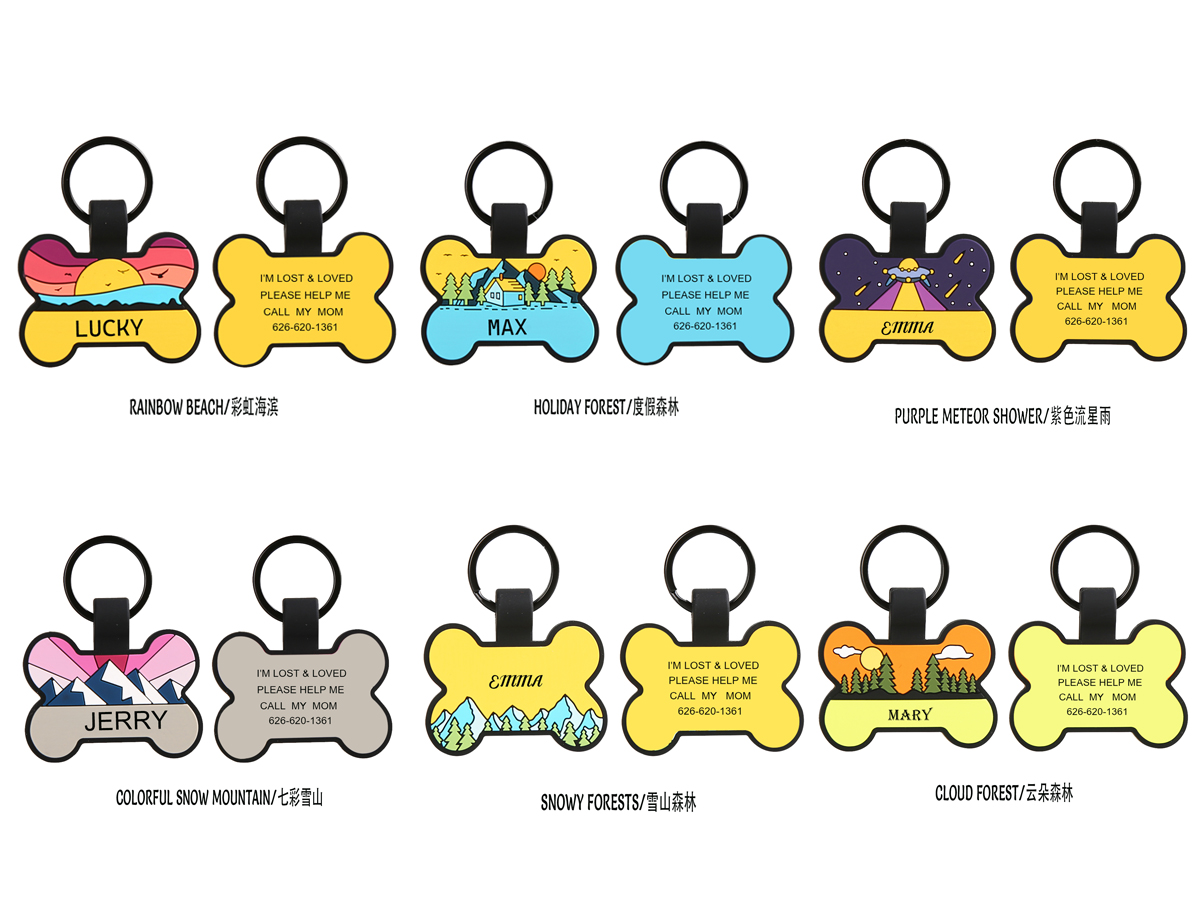
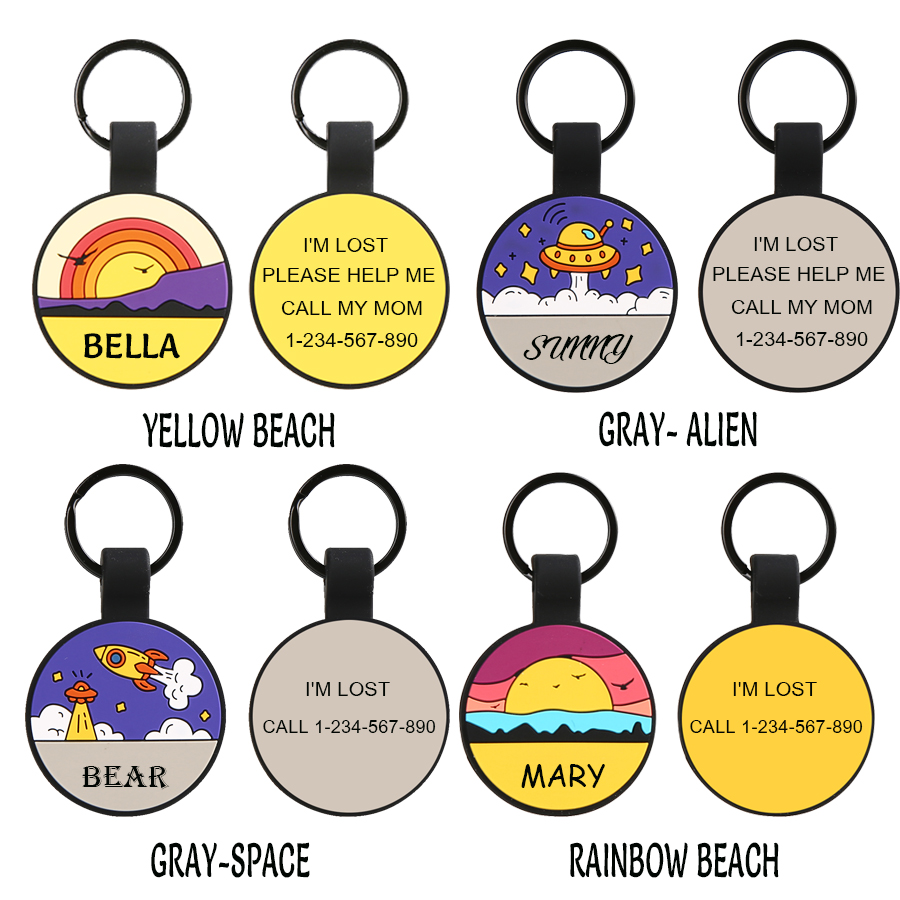
- Full-color printing — embed photographs, patterns, or brand logos directly into the tag surface
- Custom shapes — bone, heart, paw, house, or any die-cut silhouette a brand can imagine
- Dual-sided design — one side for owner contact info, the other for brand identity or decorative art
- Embossed and debossed textures — tactile branding that feels premium in the hand
For wholesale pet accessories buyers, this means a single SKU can be reimagined into dozens of variants, multiplying catalog depth without multiplying sourcing complexity.
The Rise of QR and NFC-Enabled Silicone Tags
Perhaps the most forward-looking trend reshaping the OEM pet supplies landscape is the integration of smart technology into ID tags. Silicone’s flexibility makes it uniquely suited to house QR codes and NFC chips — features that metal tags struggle to accommodate cleanly.
A QR-printed silicone tag lets a finder scan and instantly access the pet’s profile: owner contact, medical needs, dietary restrictions, even a reward offer. For B2B buyers, this opens up an entirely new product tier — the “connected” pet tag — with premium pricing and strong upsell potential.
NFC-enabled tags go further. Tapping a smartphone to the tag can trigger automated messages, open a branded landing page, or log a pet’s location. These are no longer niche products; major European and North American retailers are already rolling out NFC tag lines for 2026 holiday catalogs.
Regional Demand Patterns Worth Watching
B2B buyers should pay attention to where demand is accelerating fastest:
- North America remains the largest market, driven by high pet ownership rates (66% of households) and strong disposable income. Custom and premium tags see the highest uptake here.
- Europe is the fastest-growing region for silicone pet ID tags, fueled by strict EU regulations on pet identification and a cultural preference for sustainable, non-metal materials.
- Asia-Pacific is the emerging wildcard. Urbanization, rising middle-class pet ownership, and the explosive growth of pet-focused social media in China, South Korea, and Japan are creating massive demand for visually distinctive, Instagram-worthy tags.
- Latin America and the Middle East are showing early-stage growth, with distributors actively seeking reliable OEM partners who can deliver consistent quality at competitive wholesale pricing.
What Top-Tier B2B Buyers Are Asking Suppliers
Through conversations with procurement managers across the industry, a clear pattern emerges. The most forward-thinking buyers are no longer asking “What’s your MOQ?” or “What’s your unit price?” They’re asking:
- “Can you do full-color custom printing on both sides?” — They want differentiation on the shelf.
- “What’s your turnaround time from design approval to shipment?” — Speed-to-market matters more than ever.
- “Do you offer eco-friendly silicone options?” — Sustainability certifications are becoming table stakes in European and North American retail.
- “Can you integrate QR codes that survive 2+ years of daily wear?” — Durability of tech features is a non-negotiable.
- “Will you hold inventory for our seasonal spikes?” — Supply chain reliability is the silent dealbreaker.
If your current supplier can’t answer all five with confidence, it might be time to explore alternatives.
The OEM Advantage: Why Direct Sourcing Makes Sense Now
For B2B buyers sourcing silicone pet ID tags at scale, working directly with an experienced OEM offers advantages that off-the-shelf wholesale simply can’t match:
- Brand exclusivity — Your designs, your molds, your competitive moat. No competitor can list the identical product.
- Margin control — Cutting out intermediaries typically improves unit economics by 20-35%.
- Quality consistency — With your own QC specifications baked into the production line, returns and complaints drop sharply.
- Iteration speed — When a trend emerges (say, glow-in-the-dark tags go viral on TikTok), an OEM partner can turn a concept into a production sample in days, not months.
In an industry where speed and differentiation increasingly determine market share, the right manufacturing partnership is not a cost center — it’s a growth engine.
The Bottom Line
The pet ID tag market in 2026 is not about metal discs anymore. It’s about silicone, personalization, smart features, and supply chain agility. B2B buyers who recognize this shift early will capture shelf space and customer loyalty while competitors catch up.
Whether you’re sourcing for a boutique pet brand, stocking a multi-location retail chain, or building a DTC e-commerce line, the question isn’t whether silicone custom pet tags belong in your catalog. The question is how soon you can get them there — and who’s making them for you.
Keywords: silicone pet ID tags, custom pet tags, OEM pet supplies, wholesale pet accessories, personalized pet ID tags, silicone pet accessories, B2B pet supply sourcing, NFC pet tags, QR pet tags, pet identification tags wholesale
[90213]supplies professional anti-violence equipments and solutions for the whole world with strong and perfect production capacity. anti-violence.org
Thank you for your message boss, i will contact you if we need this ,we are also a factory